Presenters
Bianca Brandon
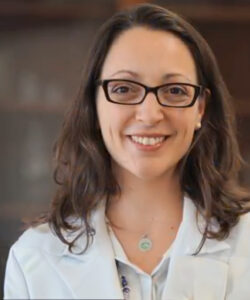
A veteran high school teacher and former forensic DNA analyst, Bianca Brandon has taught Forensic Science, Biology, AP Biology, and SERP (Science and Engineering Research Program) at Staten Island Technical High School since 2005.
Bianca holds a MA in Molecular Biology from Hunter College of the City University of New York and graduated Cum Laude with a BS in Science Education from New York University. She interned at the Department of Forensic Biology in the New York City Office of Chief Medical Examiner in 1999 and worked as a forensic DNA analyst in that department from 2000-2003.
During that time, she managed over 150 sexual assault and homicide cases and spent two years full-time identifying the victims of the World Trade Center attack on September 11, 2001, and the crash of American Airlines Flight 587 in Queens. Bianca has presented her case work and research as a forensic scientist at numerous professional meetings, such as the American Academy of Forensic Scientists Annual Conference and the Cedar Crest College Forensic Science Symposium and is the author of several articles published in peer-reviewed journals.
Bianca is a member of the Council of Forensic Science Education, the Northeast Association of Forensic Scientists Outreach Committee, and The National Science Teachers Association. She is a fellow of the Academy for Teachers, emeritus fellow of Math for America, a recipient of the Sloan Award for Excellence in Teaching Science and Mathematics, the New York Daily News Hometown Heroes in Education nominee, and a finalist for the New York City Big Apple Awards. Bianca is a member of the UFT Site Committee and Instructional Team at Staten Island Technical High School and has led several professional development sessions for middle and high school teachers across New York City.
Joy Karnas, Ph.D
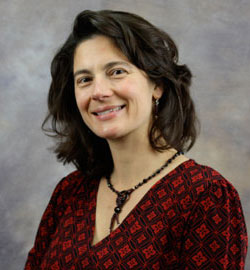
Dr. K. Joy Karnas is a Professor of Biological Sciences at Cedar Crest College in Allentown, Pa. She earned her undergraduate degree from the College of William and Mary, where she also completed a thesis-based master’s program investigating ultrastructural and phylogenetic characteristics of Bossiella. She received her Ph.D. in Molecular and Cellular Biology from the University of Arizona, with a dissertation that focused on the genetic and biochemical mechanisms underlying insect lipoprotein biosynthesis.
Since joining Cedar Crest College in 2001, Dr. Karnas has taught lecture, lab, and intensive techniques courses in molecular genetics, including the Molecular Biology course supporting the Forensic Science Master’s Program. She currently serves as director of the College’s honors program. Her active research program engages undergraduate and graduate students in projects spanning bacterial antibiotic resistance, epigenetic markers for forensic identification, and gene-knockdown approaches in invertebrate model systems.
Dr. Karnas has held numerous leadership roles in professional organizations, including more than 18 years of service to the Pennsylvania Academy of Science, progressing through the Presidential sequence and later representing the Academy at the national level. She has contributed to several NSF-funded STEM outreach initiatives, co-chaired the Da Vinci Science Center WISE Executive Advisory Council, and served for over a decade as Chair of the Pocono Environmental Education Center Board of Trustees.
Andra Lewis, Ph.D.
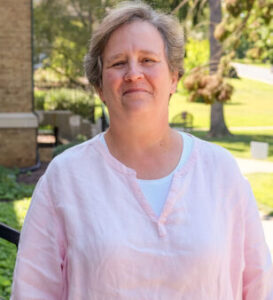
Andra Lewis, Ph.D., is an Assistant Professor in Forensic Science within the Department of Forensic Science and Justice Studies at Cedar Crest College. Prior to returning to school to obtain her Ph.D., Andra worked as both a crime scene investigator/supervisor and as a crime laboratory analyst for several mid- to large- sized police departments throughout the country for approximately 15 years. In fact, she was the first civilian hired to work for the Dallas Police Department and respond to major crimes against persons offenses including sexual assaults, robberies, and homicides. Her duties included a generalist approach to the processing of crime scenes including digital photography, FARO laser scanning, latent print processing, searching for evidence, evidence collection, packaging and submission of evidence, report writing, and testimony.
In 2018, she decided to fulfill a career goal of returning to school to obtain her Ph.D. Her research was in trace evidence and worked on several projects involving fiber evidence. Additionally, Andra was involved in a nationwide NIJ-funded project involving paint and glass.
Currently, her research area is in trace evidence, which includes fibers, paint, glass, and soil evidence, as well as crime scene investigation including management and reconstruction investigations.
Andra was also previously employed as the Program Coordinator of the Criminalistics program and Criminalistics Professor at the University of North Texas, teaching and providing training in the areas of crime scene investigation, criminal investigation, criminalistics, and fire science. She was also the director of the North Texas Forensic Academy which was a crime scene investigation training academy.
Andra’s education includes a dual Bachelor of Science degree in Biochemistry and Chemistry from California State University Long Beach, a Master of Science degree in Forensic Science with a concentration in Advanced Investigations from the University of New Haven, and a graduate certificate in Fire Science. In addition, Andra graduated with her Ph.D. in Forensic Science from Sam Houston State University in May 2023.
Lawrence Quarino, Ph.D., ABC-GKE- Director, Berner Center
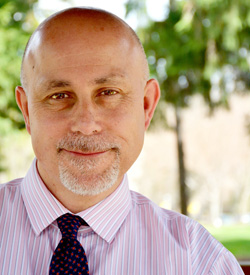
Professor of Forensic Science; Director, Undergraduate and Graduate Forensic Science Programs Expertise: Serology, DNA, and Trace Evidence Analysis; Expert Witness Testimony
Lawrence Quarino is a professor of forensic science and director of both the undergraduate and graduate forensic science programs at Cedar Crest College in Allentown, Pa. He has been at Cedar Crest College since 2002. His professional experience includes four years as a forensic scientist with the New Jersey State Police and 11 years as a supervising forensic scientist with the Office of the Chief Medical Examiner in New York City. He has provided expert courtroom testimony in more than 100 cases. He has authored or coauthored more than 50 publications in peer- and editorial-reviewed journals and is listed as an author on over 100 presentations at professional conferences. He has served as Criminalistics Section Chair of the American Academy of Forensic Sciences and as the President of the Northeastern Association of Forensic Scientists. He has professional certification with the American Board of Criminalistics and is a former Chair of the Forensic Science Educational Programs Accreditation Commission (FEPAC). In addition, he is tri-editor in chief of the Journal of Forensic Science Education and is a member of the Forensic Specialties Accreditation Board (FSAB) which has oversight authority over all certifying bodies in forensic science.
Carol Ritter, M.S., ABC-GKE
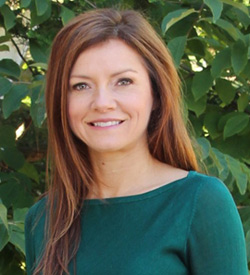
Senior Instructor, Cedar Crest College, Department of Forensic Science & Justice Studies
Assistant Director, Berner Expert Witness & Crime Scene Lab Training Center, Cedar Crest College
Forensic Consultant, Ritter Forensic Consulting
Carol Ritter began her career in 1997 as a forensic scientist with the Pennsylvania State Police (PSP) Crime Laboratory, where she analyzed controlled substances, burglary, sexual assault, and homicide cases and utilized bloodstain patterns to reconstruct crime scenes. She is certified by the American Board of Criminalistics, a member of the American Academy of Forensic Sciences and International Association of Bloodstain Pattern Analysts, and court qualified greater than 50 times at both the state and federal levels in areas of drug analysis, body fluid identification, hair identification, and bloodstain pattern reconstruction. She also served for four years as the technical coordinator for the PSP lab serology section, where she annually audited six state labs, trained new forensic scientists, and provided training to local and state law enforcement agencies in evidence collection and bloodstain pattern reconstruction. In 2017, she retired with 20 years of service to PSP and joined Cedar Crest College where she currently mentors research students and teaches undergraduate and graduate level forensic science courses/laboratories in forensic pattern analysis, crime scene reconstruction, and advanced DNA analysis. Ms. Ritter’s research focuses on forensic pattern analysis including bloodstain patterns, fingerprints, firearm-related pattern evidence, as well as DNA analysis.
In 2020, Ms. Ritter established a consulting practice where she currently analyzes cases involving bloodletting injuries for the purposes of crime scene reconstruction.
Scott Rubins
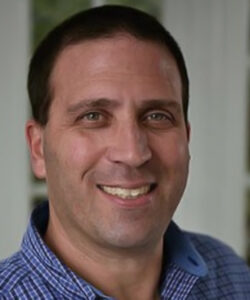
Scott Rubins has spent over three decades as an educator and teaches Forensic Science at New Rochelle High School in New York, where he has developed an innovative, hands-on program that enrolls up to 150 students each year. His students engage in real-world forensic investigations, and many earn college credit while still in high school, gaining authentic experience in evidence analysis and critical thinking.
He holds degrees from Clark University, Teachers College Columbia University, and the College of New Rochelle. In addition to his work in secondary education, Scott serves as an Adjunct Instructor in Forensic Science for Syracuse University and has taught at both undergraduate and graduate levels at the College of New Rochelle and Western Connecticut State University.
Beyond the classroom, Scott has served on the Dental Identification Team for the New York City Office of Chief Medical Examiner, assisting with the identification of victims from the World Trade Center disaster and American Airlines Flight 587. He is also a certified EMT with nearly four decades of experience and the Outreach Coordinator for the Northeastern Association of Forensic Scientists.
The program at New Rochelle High School has received international recognition and has been featured by major media outlets including the Associated Press, The New York Times, CBS, ABC, and News 12. He has also worked with the Intel International Science and Engineering Fair and was invited by the U.S. Department of State to lecture in Serbia and collaborate with forensic science leaders.
Scott is a published author whose work has appeared in the Rhode Island Bar Journal and the Journal of Forensic Science Education, focusing on juror perceptions of forensic science and authentic assessment in forensic science education. He was the recipient of the 2025 National High School Forensic Science Educator of The Year award from the Consortium of Forensic Science Organizations and is planning to retire from teaching at the end of June.
Marianne Staretz, Ph.D
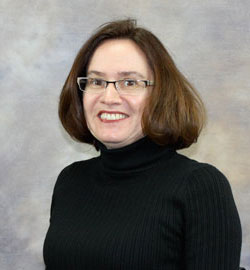
Dr. Marianne Staretz is an Associate Professor in the Department of Chemical and Physical Sciences at Cedar Crest College, where she has taught for over 25 years. She earned her B.S. in Biochemistry and her Ph.D. in Chemistry and teaches in the college’s Forensic Science program. Dr. Staretz teaches a range of undergraduate and graduate courses spanning chemistry and forensic science. At the undergraduate level, she teaches Biochemistry, Toxicology, Introduction to Chemical Principles, and Forensic Chemistry. At the graduate level, she teaches Forensic Toxicology and the Forensic Chemistry and Toxicology Laboratory. In addition to her teaching, Dr. Staretz mentors both undergraduate and graduate students in research. Her research interests focus on forensic chemistry and toxicology, including the analysis and characterization of chemical and toxicological evidence.