Skip To Content
Loading…
Apply by May 1, 2026 for Fall of 2027!

We see you making a difference in healthcare.  When you pursue your Doctor of Nursing Practice at Cedar Crest, we prioritize your success through our cohort model, ensuring clear guidance and mentorship every step of the way. 

Our Nurse Anesthesia program is delivered through a hybrid model. That means you’ll complete your first two semesters 100% online before finishing your degree in the Lehigh Valley, taking full advantage of our state-of-the-art simulation lab and your clinical placements.  

Why apply to Cedar Crest College’s Dually Accredited Nurse Anesthesia Program?

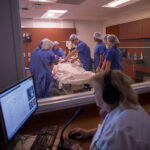
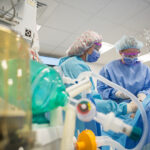
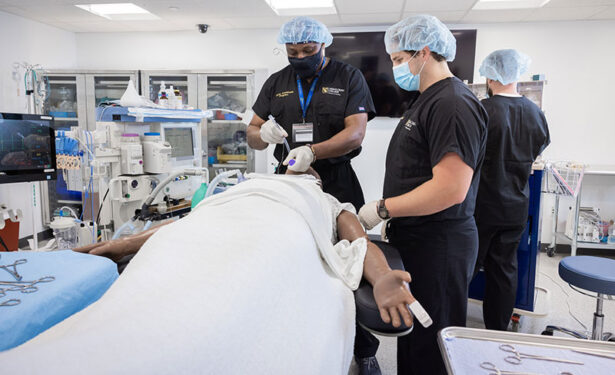
  • State-of-the-art Facilities: Our multimillion-dollar simulation center allows you to participate in a variety of simulations, in some of the finest, best-equipped facilities in the region. In addition, students have hands-on, free access 20 hours a day to our simulation lab to master their skills 
  • Small Cohorts: We prioritize your success with our small, close-knit cohort model. We admit just 25 students per year to ensure you receive clear guidance and mentorship every step of the way. You’ll receive individualized attention and personal mentoring and build meaningful connections with your faculty and peers 
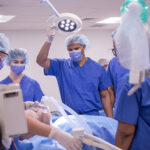
  • Experience at Top Clinical Sites: We have a dedicated clinical scheduler who will ensure that you get exposure to a diverse set of cases at top clinical sites across the tri-state area to prepare you for a range of real-world challenges in specialty children’s hospitals, NICUs, burn centers, and other complex medical sites
  • Built-in Board Exam Prep: Our graduate-level nursing programs are designed with built-in board exam preparation so that you can sit confidently for your NBC RNA 
  • Strategic location: Cedar Crest College is strategically located in the Lehigh Valley which is just 55 miles from Philadelphia and 80 miles from New York City 
  • Dual Accreditation: Our Nurse Anesthesia program is dually accredited by the Council on Accreditation of Nurse Anesthesia Educational Programs and the Commission on Collegiate Nursing Education so that you can feel confident that you’re receiving the highest standard of nursing education. 
  • Our reputation: When you become a part of our School of Nursing, you become part of a long tradition of modern nursing. Cedar Crest nurses are known throughout the area for their competence, care, and compassion.  

Nurse Anesthesia Program Statistics

Class ofProgram Cumulative Pass Rate for Graduation YearNBCRNA 1st Time Test Taker(s) Pass RateNBCRNA Test Taker(s) Within 6 Months Pass RateAttrition RateGraduate Employment Rate (within 6 months of completion)Employer Satisfaction Rating (*)
2021100%89%100%10%100%4.91
2022100%90%100%0%100%4.50
2023100%80%100%0%100%N/A
*Likert Rating Scale Utilized by Program: 1 = Unsatisfactory, 2 = Below Average, 3 = Average, 4 = Above Average, 5 = Excellent 

Graduate employment rate within six (6) months of graduation: 100%

Graduate Program Transfer Credit Policy

Students applying for admission to any of the Graduate Nursing programs (including Nurse Anesthesia, Nurse Education, Nurse Administration, or Nurse Practitioner) may have the opportunity to transfer up to 9 credits of graduate coursework from an appropriately accredited institution and at the discretion of the Graduate Program Director on a case to case basis. Credits will be considered for the following core courses only: MSN 510, MSN 512, MSN 516, NAP/MSN 514, NAP/MSN 520 as well as a maximum of two of the following courses: NAP/MSN 550, NAP.MSN 551, or NAP.MSN 552.

No transfer credits will be granted for track- specific practicum courses or their didactic counterparts where applicable. Students will be required to submit transcripts and a course syllabus for evaluation for any courses for which transfer credits are requested. Only grade B or higher will be accepted.

The Doctorate of Nursing Practice Nurse Anesthesia Program is a 36-month full time program designed for the post baccalaureate RN seeking certification in anesthesia and doctoral education. Nurse anesthesia students will have the opportunity to learn in a hands on environment to promote more effective skill development. This curriculum integrates didactic coursework with over 2,000 hours of clinical, ensuring that students administer more than 800 anesthetics to patients undergoing a wide variety of surgical and/or diagnostic procedures.

First Year

Students are predominantly in the didactic phases of the curriculum in addition to high fidelity simulation starting in the third semester. Students will develop airway management skills, positioning, patient safety, medication administration and sequence development, among other skills prior to starting clinical practicum.

Second Year

Students have a mix of didactic, simulation and clinical practicum during the second year. The student becomes more familiar with the operating room environment and will apply theory to practice. DNP Leadership Practicum I is in the spring semester which combines practicum experiences with scholarly activities to provide in-depth learning to develop a proposal for the DNP project.

Third Year

In the third year, students continue their clinical practicum and simulation, finalize the DNP project and prepare for the National Certification Exam with on-campus mandatory study days throughout the year.

Employment During the Program

Employment is highly discouraged for students in the program.  Student Registered Nurse Anesthetists (SRNAs) can expect to study 3 – 5 hours per weeknight and 6 – 8 hours per weekend day during the program, in addition to clinical requirements which can be up to 32 to 40 hours per week.

Course Outline for the Doctorate of Nursing Practice Nurse Anesthesia Program

Graduate Nursing Core Courses Online (15 credits)
NAP 514 Informatics & Technology in Nursing
NAP 520 Vulnerable Populations: Nursing Perspectives
NAP 550 Physiology & Pathophysiology for Advanced Practice Nursing
Across the Lifespan
NAP 551 Advanced Health & Physical Assessment Across the Lifespan
NAP 552 Pharmacological Principles of Clinical Therapeutics Across the Lifespan

Nurse Anesthesia Core Courses on campus (52 credits)
NAP 701 Introduction to Nurse Anesthesia Practice
NAP 702 Basic Principles of Nurse Anesthesia
NAP 703 Bioscience for Nurse Anesthesia
NAP 704 Advanced Physiology & Pathophysiology for Nurse Anesthesia
NAP 705 Nurse Anesthesia Pharmacology
NAP 706 Advanced Principles of Nurse Anesthesia
NAP 707 Anesthetic Management for Special Procedures I
NAP 708 Anesthetic Management for Special Procedures II
NAP 709 Professional Aspects of Nurse Anesthesia Practice
NAP 710 Crisis Resource Management
NAP 711 Senior Seminar
NAP 750 Introduction to Clinical Practicum
NAP 751 Clinical Practicum I
NAP 752 Clinical Practicum II
NAP 753 Clinical Practicum III
NAP 754 Clinical Practicum IV
NAP 755 Clinical Practicum V
NAP 756 Clinical Practicum VI

DNP Core Courses Online (28 credits)
NAP 801 Methods for Scholarly Inquiry
NAP 802 Biostatistics for Evidenced-Based Practice
NAP 803 Theories of Leadership & Organization
NAP 804 Health Policy, Economics, & Finance
NAP 805 Foundation for Transformation: Translating Evidence into Practice
NAP 806 Evaluation Methods for Safety & Quality Improvement
NAP 850 DNP Project I
NAP 851 DNP Project II
NAP 852 DNP Project III
NAP 853 DNP Project IV

Anesthesia Resources

BSN to DNP Nurse Anesthesia Program (NAP) Goals

The BSN to DNP NAP curriculum integrates didactic course work with hands on simulated activity for the students.  Students will start clinical during the fall of the second year.  Course objectives in each course guide the selection of learning activities and evaluation methods throughout the curriculum. Each course builds on the knowledge, skills, and abilities students developed in previous course work. Over the plan of study in the BSN to DNP NAP, students are expected to attain the following eight overarching goals:

  1. Demonstrate advanced knowledge and competence in nurse anesthesia practice in various health care setting for patients in all acuity levels.
  2. Critically examine and demonstrate the ability to apply findings from the scientific literature as a basis for informed nurse anesthesia practice.
  3. Formulate and implement physiologically sound anesthesia techniques tailored to patient physical status and age.
  4. Identify researchable problems in nurse anesthesia practice and conduct systematic evaluation of evidence.
  5. Contribute to new knowledge generation through participation in anesthesia research.
  6. Participate in the development of clinical, administrative, and educational roles for advanced practice nurses through didactic and clinical coursework.
  7. Develop collaborative working relationships with members of our community of interest including surgical and anesthesia teams to enhance patient safety.
  8. Develop and make available faculty expertise for the benefit of the local, regional national and international communities.

Nurse Anesthesia Program (NAP) Expected Learning Outcomes

At the completion of the program the graduate will be prepared to:

  1. Perform a pre-anesthetic interview and physical assessment using patient history, physical examination, review of medical records, and appropriate laboratory data.
  2. Develop an appropriate anesthesia care plan consistent with the overall medical and nursing regimen and established guidelines, utilizing appropriate principles of basic and behavioral sciences in protecting patients from iatrogenic complications.
  3. Administer physiologically sound anesthetics to patients of all ages and physical status   categories, utilizing universal precautions and the principles of general and regional anesthesia as they apply to the diagnostic, operative and physiologic condition of the patient.
  4. Perform comprehensive and appropriate equipment checks and position or supervise positioning of patients to assure optimal physiologic function and patient safety.
  5. Recognize and evaluate physiologic responses to the anesthetic, implementing appropriate action that reflects the use of sound physiologic and pharmacologic principles, referring to a physician those responses beyond the nurse anesthetist’s ability to manage consistent with practice standards and policies.
  6. Use and interpret a broad variety of monitoring modalities including electronic monitors, taking appropriate action based on sound principle of anesthesia management.
  7. Evaluate the post-anesthetic course of the patient and recommend a course of action directed toward correcting any anesthesia-related complications.
  8. Serve as a resource person, team leader or team member, in the areas of acute care, cardiopulmonary resuscitation, respiratory therapy and fluid management and assist others to expand their knowledge in these areas.
  9. Perform within appropriate medical, legal, and ethical standards of anesthesia practice, accepting responsibility and accountability for own practice, recognizing personal and professional strengths and limitations, and taking appropriate actions consistent with valid self-awareness.
  10. Demonstrate active professional commitment and involvement in the state organization for nurse anesthetists, and, active commitment and involvement in quality management activities.

The Program does not discriminate based on race, age, creed, gender, sexual orientation, color, national origin, marital status, religion, or any other factor prohibited by law. This applies to all aspects of its operations.

Apply by May 1, 2025 for Fall of 2026!

Admission Requirements

  • Graduation from an accredited nursing program.
  • The program requires the student to have a bachelor’s degree in nursing. All BSN courses must be completed prior to application deadline.
  • Unencumbered RN License is required. PA and NJ licensure must be documented prior to starting the program.
  • Must have one full year of intensive care experience in the United States prior to application deadline.
  • Certification in Critical Care Nursing (CCRN) is mandatory. American Association of Critical-Care Nurses: Get Certified
  • Applicants should have a GPA higher than 3.2 out of 4.0 for all undergraduate or graduate degrees. No GRE is required.
  • All applicants must have successfully completed Anatomy and Physiology I & II, General Chemistry, and Nursing Research with a grade of B or better.

Application Process

SUBMIT THE FOLLOWING DOCUMENTS

  • Three current letters of recommendation: an academic referencea supervisor, and a mentor/colleague.
  • Official transcripts for ALL schools attended after high school regardless of number of credits.
  • Advanced Cardiac Life Support (ACLS) certification, Pediatric Advanced Life Support (PALS), Basic Life Support (BLS) from the American Heart Association.
  •  An essay that outlines personal goals for graduate study in Nurse Anesthesiology, using APA 7th edition format (less than 500 words).
  • Documentation of an observational experience with a Certified Registered Nurse Anesthetist (CRNA)
  • Interview with the Admissions Committee.
  • Current Curriculum Vitae (CV)

International Students

Visa status

  • Permanent resident or U.S. citizens who reside in the U.S., may apply online.
  • Residents outside the U.S., but currently hold a Visa allowing work in the U.S. as a registered nurse, may also apply online.
  • Financial documentation does not need to be submitted, a work visa waives this need.

Transcripts

  • The program requires that all non-US transcripts evaluated by a recognized educational credential evaluation service. Please arrange for transcript reports to be sent directly to the Cedar Crest College.
  • A certified course-by-course evaluation is required of all academic transcripts and diplomas performed by a recognized educational credential evaluation service such as World Education Services (WES: http://www.wes.org/) or Educational Credential Evaluators (ECE: http://www.ece.org/). Please note: official transcripts are still required in addition to the evaluation.
  • Contact the foreign transcript evaluation service as early as possible. The service may take several weeks to process foreign transcripts once it is received. In order to be considered for admission, the foreign transcript evaluations will need to be received by the nurse anesthesia program by the May 1 application deadline.

English Language Requirements

If English is a second language, or if a four-year degree program is not completed from an accredited U.S. school, it is required to complete one of the following: Test of English as Foreign Language (TOEFL), International English Language Testing System (ILETS), Scholastic Aptitude Test (SAT), or American College Testing (ACT).  Demonstration of spoken English proficiency may also be required.

Transfer Credits

The Nurse Anesthesia Program accepts six (6) to nine (9) transfer credits.

Technical Standards

Applicants for the nurse anesthesia program must possess certain abilities and skills deemed essential functions for the care of patients. Read more about the technical standards as determined by Cedar Crest College.

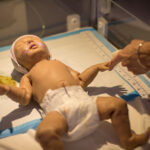
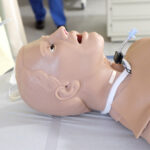
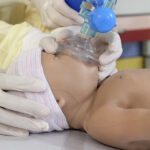
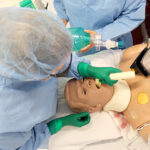
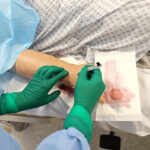
The graduate simulation center features state of the art technology including 2 adult high-fidelity manikins, 1 high-fidelity birthing mom and a high-fidelity newborn baby in realistic practice settings such as critical care patient rooms, a preoperative assessment room and a functional operating room.  Students utilize functional hospital equipment such as anesthesia machines, bronchoscopes, video-laryngoscopes and ultrasound machines to prepare for the clinical environment. The advanced health assessment lab promotes student engagement in learning via skills trainers, live patient actors, and advanced computer technology.  The simulation center also provides for a broad array of hands-on opportunities to learn epidural procedures, central line insertions, arterial line insertions, and advanced airway skills.  Audiovisual technologies allow students to participate in simulations throughout the center, stream live scenarios & debrief on-site and off-site via the web.

Simulation activities include:

First Year

  • Gowning and Gloving
  • Sterile Field Preparation
  • Intravenous  and Arterial Line Insertion
  • Anesthesia Gas Machines
  • Pre-operative Evaluation
  • Patient Positioning
  • Induction of and Emergence from Anesthesia
  • Basic Airway Workshop
  • Problem Based Simulation

Second and Third Year

  • Difficult Airway Workshop
  • Central Venous Pressure (CVP) Workshop
  • Pediatric Bootcamp
  • Spinal and Epidural Workshop
  • Obstetrical Simulation
  • Double Lumen Endotracheal Tube Insertion
  • Trauma Simulation
  • Crisis Resource Management Scenarios
  • Peripheral Nerve Block Workshop

Tuition and Fees

Per Credit Total Credits Tuition Library Resource Fee Clinical Fee NAP Bundle Fee DNP fees per student Class of 2021 Program Cost per student
1st Year: Fall 2023 – Summer 2024 1,243 37 45,991 1,000 1,000 3,000 45,700
2nd Year Estimate: Fall 2024 – Summer 2025 1,280 34 43,530 1,000 1,000 3,000 1,000 45,655
3rd Year Estimate: Fall 2025 – Summer 2026 1,319 24 31,649 1,000 1,000 3,000 2,000 33,841
Totals 95 $121,170 $3,000 $3,000 $9,000 $3,000 $139,170

One Time Expenses

One Time Fee Per Student
NAP Deposit $1,500 Towards tuition, non-refundable
Application Fee $50 Non-refundable
Graduation Fees $1,000 Assessed with last NAP course

Out of Pocket Student Expenses

Projected Out of Pocket Student Expenses Cost
Laptop $1,500.00
Stethoscope $150.00
Precordial Stethoscope $105.00
Books (total estimated cost for three years) $2,700.00
NJ, PA, and DE licensure initial fee (renewal every 2 years) $450.00
FBI fingerprinting ($50.00/year X 3 years) $150.00
Child Abuse Clearance ($15.00/year X 3 years) $45.00
BLS (renewal every 2 years) $50.00
ACLS (renewal every 2 years) $100.00
PALS (renewal every 2 years) $100.00
Traveling expenses to clinical: ie. parking, gas, car expenses $3,000.00
One anesthesia conference per year: ie. PANA, AANA Annual Congress ($300.00/year X 3 years) $900.00
One anesthesia review course: ie. Valley Review, Core Concepts $800.00
Prodigy four (4) years anesthesia review $499.00
National Certification Exam $995.00
Health Insurance (if not through the College) $2,300.00
Castlebranch Initial Fee $167.00
Castlebranch $109 per year $218.00
AANA Membership (required) One time fee for three years $200.00
AANA Malpractice Insurance $225 yearly $675.00
Typhon $100.00
Personal Ultrasound Probe $2,500.00
APA Module $80.00
SEE Exam $280.00
Total Projected Out of Pocket Student Expenses $18,064.00
*estimated and subject to change

Visit our Financial Aid page here

The technical standards for the Cedar Crest College School of Nursing outline the essential skills and competencies required for both undergraduate and graduate nursing students to provide high-quality, compassionate patient care. These standards emphasize the acquisition of both foundational and advanced knowledge in clinical reasoning, healthcare systems, and evidence-based practice. Undergraduate students must demonstrate the ability to synthesize information, communicate effectively, and apply clinical judgment in patient care. Graduate students build on these skills by integrating complex theoretical knowledge, analyzing data, and making informed, evidence-based decisions. Both levels require proficiency in using technology, patient-centered care, and maintaining professionalism and lifelong learning. Students must also be able to perform essential technical skills and procedures, with accommodation provided as necessary to support individual needs and ensure equitable access to meet these requirements. The College provides reasonable accommodations to students on a nondiscriminatory basis consistent with legal requirements as outlined in the Americans with Disabilities Act (ADA) of 1990, the Americans with Disabilities Act Amendments ACT (ADAAA) of 2008, and the Rehabilitation Act of 1973. If you are an applicant with a disability who may require accommodations in our program, we encourage you to contact Student Accessibility Services at  for a confidential consultation.

Graduate Nursing Programs Technical Standards

Acquiring Fundamental Knowledge

  • Theoretical Foundations: Graduate nurses must successfully complete advanced education in subjects such as pathophysiology, pharmacology, and health assessment. This knowledge forms the basis for understanding complex patient care by delving into theoretical frameworks to develop effective clinical reasoning skills.
  • Current Research and Trends: Graduate nursing students must stay current with the latest research and emerging healthcare trends to provide high-quality evidence-based care. Critical appraisal, synthesis and translation of scientific evidence informs best practice.
  • Healthcare Systems Knowledge: Graduate nursing students must understand the structure, policies, and functions of healthcare systems to enable them to navigate the complexities of patient care within different settings.

Developing Communication Skills

  • Effective Verbal Communication: Graduate nurses must master the ability to communicate clearly and effectively with patients, families, students, preceptors and the healthcare team. This includes active listening, providing patient education, and navigating sensitive discussions with compassion and clarity.
  • Nonverbal Communication: Graduate nurses must recognize and effectively utilize body language, facial expressions, and other nonverbal cues as important for building rapport and ensuring understanding. This is demonstrated by congruency between verbal communication and nonverbal expression, with consideration of diverse cultural mores.
  • Documentation Skills: Graduate nurses must demonstrate proficient writing skills. This is necessary for accurate and thorough documentation of patient care, transitions of care, research, scholarship, and legal compliance.

Interpreting Data

  • Clinical Data Analysis: Graduate nurses must be skilled in analyzing and synthesizing clinical data from various sources, including patient histories, diagnostic tests, and monitoring systems. This involves identifying patterns and anomalies that inform care decisions.
  • Use of Technology: Graduate nurses must be familiar with electronic health records (EHRs) and data management systems, as well as adept at using technology to enhance data interpretation and patient care.
  • Quantitative and Qualitative Analysis: Graduate nurses must understand that the analysis of both quantitative and qualitative data is important for making comprehensive clinical assessments and engaging in research activities.

Integrating Knowledge to Establish Clinical Judgement

  • Holistic Assessment: Graduate nurses must be able to conduct thorough assessments that consider physical, psychological and socio-cultural factors affecting patient health. This holistic approach informs clinical judgment and decision-making.
  • Application of Theoretical Knowledge: Graduate nurses must integrate knowledge from various disciplines (nursing, medicine, psychology, sociology, education) into clinical practice to make informed decisions that are patient-centered and evidence-based.
  • Ethical and Legal Considerations: Graduate nurses must incorporate ethical principles and legal frameworks into clinical judgment to ensure that care decisions respect patient autonomy and adhere to professional standards.

Implementing and Evaluating Nursing Interventions

  • Evidence-Based Practice: Graduate nurses must be able to select and implement interventions based on the most relevant and current evidence. This includes utilizing clinical practice guidelines and evidence-based protocols to inform their actions.
  • Patient-Centered Care: Graduate nursing level care should be tailored to meet the individual needs and preferences of patients. This involves engaging patients in their plans of care and considering their values and beliefs.
  • Outcome Evaluation: Graduate nurses must evaluate the effectiveness of nursing interventions. Graduate nurses must be skilled in assessing patient outcomes, adjusting plans of care as necessary, and using feedback to improve practice.

Incorporating Appropriate Professional Attitudes and Behaviors into Nursing Practice

  • Professionalism: Graduate nurses are expected to demonstrate professionalism through reliability, accountability, and adherence to ethical standards. This includes maintaining patient confidentiality, advocating for patients’ rights and contributing to a safe, collegial workplace. Graduate nurses must uphold high standards of honesty, integrity, ethical behavior, and advocacy for the nursing profession as a whole within interdisciplinary teams.
  • Compassion and Empathy: Graduate nurses must be committed to providing compassionate care. Graduate nurses must cultivate empathy and understanding to address the physical, psychological and socio-cultural needs of patients.
  • Lifelong Learning and Adaptability: Graduate nurses must embrace a mindset of lifelong learning to adapt to the evolving healthcare environment. Graduate nurses should actively seek opportunities for professional development and be open to feedback and change.

Approved 8.6.2025

Dive A Little Deeper

Graduate Nursing Core Courses Online (15 credits)
NAP 514 Informatics & Technology in Nursing
NAP 520 Vulnerable Populations: Nursing Perspectives
NAP 550 Physiology & Pathophysiology for Advanced Practice Nursing
Across the Lifespan
NAP 551 Advanced Health & Physical Assessment Across the Lifespan
NAP 552 Pharmacological Principles of Clinical Therapeutics Across the Lifespan

DNP Courses (28 credits)
DNP 801 Methods for Scholarly Inquiry (3 credits)
DNP 802 Biostatistics for Evidence-based Practice (3 credits)
DNP 803 Theories of Leadership & Organization (3 credits)
DNP 804 Health Policy, Economics, & Finance (3 credits)
DNP 805 Foundation for Transformation: Translating Evidence into Practice (3 credits)
DNP 806 Evaluation Methods for Safety & Quality Improvement (3 credits)
DNP 850 DNP Project I (4 credits) – 1 didactic credit, 3 clinical credits
DNP 851 DNP Project II (4 credits) – 1 didactic credit, 3 clinical credits
DNP 852 DNP Project III (2 credits)
DNP 853 DNP Project IV – Maintenance of Candidacy (1 credit)

Nurse Anesthesia Core Courses on campus (52 credits)
NAP 701 Introduction to Nurse Anesthesia Practice
NAP 702 Basic Principles of Nurse Anesthesia
NAP 703 Bioscience for Nurse Anesthesia
NAP 704 Advanced Physiology & Pathophysiology for Nurse Anesthesia
NAP 705 Nurse Anesthesia Pharmacology
NAP 706 Advanced Principles of Nurse Anesthesia 
NAP 707 Anesthetic Management for Special Procedures I
NAP 708 Anesthetic Management for Special Procedures II
NAP 709 Professional Aspects of Nurse Anesthesia Practice
NAP 710 Crisis Resource Management
NAP 711 Senior Seminar
NAP 750 Introduction to Clinical Practicum
NAP 751 Clinical Practicum I
NAP 752 Clinical Practicum II
NAP 753 Clinical Practicum III
NAP 754 Clinical Practicum IV
NAP 755 Clinical Practicum V
NAP 756 Clinical Practicum VI

Tuition Reduction

Tuition for the Master of Science in Nursing (MSN) and Doctor of Nursing Practice (DNP) programs have been reduced beginning in the Fall 2024 semester, making them comparable to similar nursing programs in the Lehigh Valley.(Note: ABSN and CRNA programs not included)

Upcoming Admissions Events

Dec 10
  • Wed
  • 7:00PM – 8:00PM
Graduate Nursing Online Information Session Learn More
Feb 02
  • Mon
  • 7:30PM – 8:30PM
Accelerated BSN Information Session Learn More
Feb 25
  • Wed
  • 7:00PM – 8:00PM
Graduate Nursing Online Information Session Learn More

Cooperative Agreements

Cedar Crest College collaborates with several academic institutions to provide our students with innovative pathways that help them succeed in their chosen fields.

Cedar Crest Accounting Students in the Classroom

How To Apply

Ready to apply as a graduate student?

Cedar Crest student smiling on campus

The Cedar Crest College Nurse Anesthesia Program is fully accredited by the Council on Accreditation of Nurse Anesthesia Education Program, which is recognized by the US Department of Education and the Council for Higher Education Accreditation (CHEA). 

Accreditation status: Continued accreditation granted for ten years from 2023 to 2033 for DNP-NA.

Council on Accreditation of Nurse Anesthesia Educational Programs (COA)
10275 W. Higgins Rd., Suite 906
Rosemont, IL 60018-5603
224-275-9130

www.coacrna.org

The master’s degree program in nursing, Doctor of Nursing Practice program and post-graduate APRN certificate program at Cedar Crest College are accredited by the Commission on Collegiate Nursing Education, 655 K Street NW, Suite 750, Washington, DC 20001, 202-887-6791.
https://www.aacnnursing.org/ccne-accreditation

Faculty & Staff

Who’s teaching you is as important as the curriculum you choose.
Let’s put a face to some of the names you’ll be seeing on the course listings!

Contact: