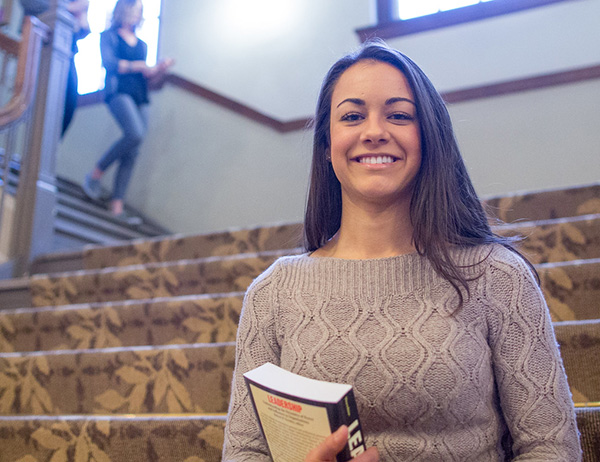
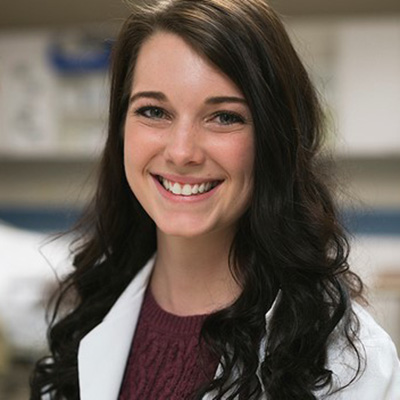
The School of Nursing at Cedar Crest College has a great reputation for providing endless opportunities for you to make a positive impact on your world with a nursing degree.
There’s simply something special about a Cedar Crest nurse. We hear it from healthcare employers all the time. Competence. Care. Compassion. Whether you’re looking to advance your career in health care or start something entirely new, at Cedar Crest College, we see you becoming part of a long tradition of modern nursing.
The CCC nursing program is one of the most well-known and respected in the region. We offer a traditional full-time program beginning each fall, or you can choose to study part-time with winter or summer entry. Men are welcome in all undergraduate program options.
Our hands-on simulation center is one of the best around — and as a CCC nursing student, you’ll have free, unsupervised access to use it 20 hours a day. You’ll have a dedicated nursing coach who’ll make sure you get the support you need. You’ll gain global experience. And you’ll enjoy an abundance of clinical opportunities, from birth through end-of-life, and all the specialties in between.
Cedar Crest recognizes that adult students have a lot of responsibilities, so we’ve designed our BSN program to be taken through evening and weekend classes so you can still achieve your goals of becoming a nurse.
Students have the ability to enter the prelicensure Nursing Program in one of five distinct tracks, which provides the opportunity to select the most appropriate track for their course of study. Program tracks include:
Full-Time Program Option: Fall Start
Full-Time 3-Year (3YBSN) Program Option: Fall Start
Part-Time Day/Evening Program Option: Fall Start
Part-Time Evening/Weekend Program Option: Spring Start
Accelerated BSN Program (ABSN) Program Option: Summer Start
After completion of the pre-requisite coursework, the Full-Time, and Part-Time Program Options take 2 years for completion while the ABSN Program Option allows students to complete the program in 15 months. Attendance in Summer semesters are required in the Part-Time Program Option.
Undergraduate Nursing Program Curriculum
The curriculum of the Undergraduate Program at Cedar Crest College is based on the professional standards, guidelines, and competencies of:
The American Association of Colleges of Nursing Essentials of Baccalaureate Education for Professional Nursing Practice,
Quality and Safety in Education for Nurses (QSEN), and
National Academy of Medicine Competencies for Nursing Education
The curriculum builds upon the foundational knowledge of the liberal arts, allowing students to obtain core nursing knowledge, core nursing competencies, and professional role development through their classroom and clinical work.
Undergraduate Nursing Program Clinical Experience
A total of 819 clinical/laboratory hours across a variety of patient care settings
105 clinical hours in Independent Practicum spent 1:1 with a nurse preceptor.
Students spend time in clinical experiences that include peer leadership, service-learning and mentoring.
Simulation experiences across a variety of patient care settings using state-of-the-art high-fidelity human patient simulators and standardized patients.
Program Outcomes
Cedar Crest College is a private, four-year women’s liberal arts college located in Allentown, Pennsylvania. Cedar Crest College is a liberal arts college primarily for women dedicated to the education of the next generation of leaders. Cedar Crest College prepares students for life in a global community by educating the whole student at all stages of life and experience.
The mission of the Cedar Crest College Bachelor of Science in Nursing major is to prepare professional nurses by building on a foundation firmly grounded in the liberal arts. A Cedar Crest College nursing education fosters development of the whole person while cultivating commitment to lifelong learning. Nursing graduates are empowered to assume leadership roles in a global society.It is approved by the Pennsylvania State Board of Nursing and accredited by the Accreditation Commission for Education in Nursing (ACEN), 3390 Peachtree Road NE, Suite 1400, Atlanta, GA 30326, (404) 975-5000.
Performance on Licensure Examination – Disaggregated by Program Options
Year
Full-Time
ABSN
Part-Time Spring Start
Part-Time Summer Start
2024 – 2025
100% (30/30)
100% (3/3)
100% (13/13)
100% (1/1)
2023 – 2024
100% (28/28)
100% (5/5)
100% (19/19)
100% (10/10)
2022 – 2023
98% (39/40)
100% (18/18)
96% (22/23)
100% (25/25)
Program Completion Rate – Disaggregated by Program Options
Year
CCC UG On-Time Completion Rates
Part-Time Summer Start
Part-Time Spring Start
ABSN
Full-Time
RN-BSN
2024 – 2025
56% (41/73)
33% (2/6)
53% (8/15)
100% (8/8)
52% (23/44)
100% (2/2)
2023 – 2024
58% (44/76)
50% (5/10)
50% (6/12)
100% (9/9)
53% (23/43)
50% (1/2)
2022 – 2023
55% (71/130)
10% (1/10)
50% (13/26)
78% (18/23)
54% (36/67)
75% (3/4)
Bachelor of Science in Nursing Role-Specific Graduate Competencies
Defines the role of the graduate upon program completion.
Scholarship for Evidence-Based Practice
Graduates will ground their profession in the translation of evidence-based practice.
Interprofessional Communication and Collaboration for Improving Patient Health
Outcomes
Graduates will communicate and collaborate among healthcare professionals to deliver high quality patient care.
Clinical Prevention and Population Health
Graduates will engage in health promotion and disease prevention strategies at the individual, family, community, and systems level to improve population health.
Professionalism and Professional Value Graduates will demonstrate professionalism and incorporate the inherent values of altruism, human dignity, integrity, and social justice to their profession.
Baccalaureate Generalist Nursing Practice
Graduates will be prepared to provide wholistic care to patients, including individuals, families, groups, communities, and populations across the lifespan and across the continuum of healthcare environments. (as adapted by the AACN Essentials)
Bachelor of Science in Nursing Student Learning Outcomes
Synthesize knowledge from the physical and social sciences, humanities, and nursing in making nursing practice decisions involving culturally diverse individuals, families, and communities.
Practice effective communication with individuals, families, and communities.
Integrate all components of the nursing process in promoting optimal health of individuals, families, and communities.
Collaborate with other members of the health care team in affecting the delivery of health care.
Synthesize research findings into the practice of nursing and the delivery of care.
Demonstrate competency to assume a beginning professional nurse role.
The technical standards for the Cedar Crest College School of Nursing outline the essential skills and competencies required for both undergraduate and graduate nursing students to provide high-quality, compassionate patient care. These standards emphasize the acquisition of both foundational and advanced knowledge in clinical reasoning, healthcare systems, and evidence-based practice. Undergraduate students must demonstrate the ability to synthesize information, communicate effectively, and apply clinical judgment in patient care. Graduate students build on these skills by integrating complex theoretical knowledge, analyzing data, and making informed, evidence-based decisions. Both levels require proficiency in using technology, patient-centered care, and maintaining professionalism and lifelong learning. Students must also be able to perform essential technical skills and procedures, with accommodation provided as necessary to support individual needs and ensure equitable access to meet these requirements. The College provides reasonable accommodations to students on a nondiscriminatory basis consistent with legal requirements as outlined in the Americans with Disabilities Act (ADA) of 1990, the Americans with Disabilities Act Amendments ACT (ADAAA) of 2008, and the Rehabilitation Act of 1973. If you are an applicant with a disability who may require accommodations in our program, we encourage you to contact Student Accessibility Services at for a confidential consultation.
Undergraduate Program Technical Standards
1. Acquiring fundamental knowledge
The ability to learn in multiple settings, find information, and synthesize information into concepts and actions focused on the care of the recipient of nursing care. The ability to be a lifelong learner.
Must have the ability to acquire and understand knowledge.
Must have the ability to learn in a variety of educational settings (classroom, lab, clinical, individual or small group settings, seminars, online coursework, and physical demonstrations or with Virtual Reality programs)
2. Developing communication skills Effective communication abilities with the recipient of nursing care and the healthcare team -including support individuals and non-health care team members.
Must acquire the skills to effectively elicit or interpret information, medical history and other information pertinent to the care of the recipient of nursing care using one or more means (verbal, written, assisted -for example TTY, and/or electronic)
Must acquire the skills to effectively convey information or interpretation of information to the recipient of nursing care and the health care team using one or more means (verbal, written, assisted, for example TTY, and or electronic)
Must acquire the skills to effectively communicate/ collaborate in a team setting.
3. Interpreting data The ability to assess and monitor health needs. The ability to observe and respond to health and illness.
Must acquire the skills to demonstrate effective assessment and monitoring of conditions (health or illness) affecting/impacting the recipient of nursing care.
Must acquire the skills to obtain and interpret information from assessments of the recipient of nursing care (such as respiratory, cardiac function, blood pressure, neurologic function etc.)
Must acquire the skills to obtain and interpret information from a comprehensive assessment of the recipient of nursing care that may yield diagnostic representations of physiologic phenomena.
Must acquire the skills to obtain and interpret assessments of the recipient of nursing care’s environment
Must acquire the skills to obtain and interpret assessments of the recipient of nursing care’s responses to health across the continuum
4. Integrate knowledge to establish clinical judgement The ability to make health care decisions grounded in critical thinking, evidence-based practices and problem solving for the recipient of nursing care in illness, health and across the continuum.
Must acquire the ability to integrate aspects of assessment (performance, direct, interpretation) and evaluation (development, implementation) in the care of the recipient of nursing care.
Must acquire the ability to utilize knowledge of clinical judgement, decision-making and critical thinking in multiple environments of nursing care.
5. Implementation and evaluation of nursing interventions
The ability to administer nursing interventions based on assessment data and a designated plan of care.
Must acquire the skills for safe and accurate administration of medications
Must acquire the skills for safe and accurate performance of procedures
Must acquire the skills for safe and accurate provision of treatments/interventions.
6. Incorporating appropriate professional attitudes and behaviors in nursing education and practice. Demonstration through behavior or interpersonal skills the characteristics of integrity, ethical conduct, accountability, interest, motivation, and concern for others.
Must acquire interpersonal skills which allow for professional interactions with the recipient of nursing care.
Must acquire interpersonal skills which allow for professional interaction with other health care team members
Must acquire skills to be a change agent in health care by promoting new and necessary ways to provide quality health care and quality nursing care.
Approved 8.6.2025
How To Apply
Applying is free and straightforward—because we believe nothing should stand in the way of your dreams!
Nursing Courses required for the Bachelor of Science in Nursing Full-Time and Part-Time Program Tracks
NUR 309 Health Promotion I 5 credits NUR 311 Health Assessment 3 credits (didactic offered online; lab offered in a face-to-face format) NUR 313 Mental Health Promotion 4 credits NUR 314 Pharmacology 3 credits NUR 321 Health Promotion II 5 credits NUR 325 Essentials of Evidence-based Practice for Nursing 3 credits NUR 326 Concepts in Professional Nursing 3 credits (online) NUR 329 Family Health Promotion 5 credits NUR 331 Health Promotion III 5 credits NUR 335 Leadership in Nursing* 5 credits (didactic may be online) NUR 336 Population Focused Health 4 credits NUR 341 Complex Health Problems 5 credits NUR 342 Independent Practicum 4 credits *Capstone Experience
Tuition for the Bachelor of Science in Nursing (BSN) programs have been reduced beginning in the Fall 2024 semester, making them comparable to similar nursing programs in the Lehigh Valley. (Note: ABSN and CRNA programs not included)
“The labs are AMAZING. And to be able to use them pretty much whenever I wanted to practice my skills really helped me build competence — and confidence — in my abilities.”
-Sydney Frish ’19, BSN
Cooperative Agreements
Cedar Crest College collaborates with several academic institutions to provide our students with innovative pathways that help them succeed in their chosen fields.
Transfer Credits
We offer one of the most generous transfer credit policies in the Lehigh Valley, and our transfer scholarships make the price of your Cedar Crest education even more affordable.
The master’s degree program in nursing, Doctor of Nursing Practice program and post-graduate APRN certificate program at Cedar Crest College are accredited by the Commission on Collegiate Nursing Education, 655 K Street NW, Suite 750, Washington, DC 20001, 202-887-6791. https://www.aacnnursing.org/ccne-accreditation
The baccalaureate, master’s, post master’s certificate nursing programs at Cedar Crest College located in Allentown, PA are accredited by the: Accreditation Commission for Education in Nursing (ACEN). 3390 Peachtree Road NE, Suite 1400 Atlanta, GA 30326 (404) 975-5000 acenursing.org
The most recent accreditation decision made by the ACEN Board of Commissioners for the baccalaureate, master’s and post master’s certificate nursing programs is continuing accreditation.