Skip To Content
Loading…

We see you leading and instructing the next generation of caring and competent nurses. Our dually accredited, online Nurse Educator program will give you the skills you need to prepare the next generation of nursing professionals and to advance the knowledge of current nurses and health care consumers.  

You’ll learn how to create effective learning environments for clients and students, evaluate how well they’re learning, formulate outcomes and design curricula, engage in scholarship, and function as a change agent and leader.  

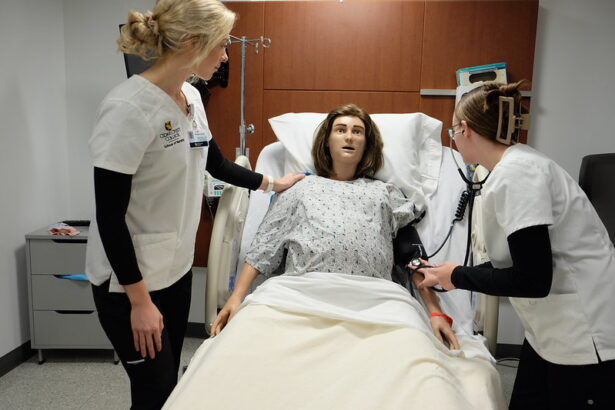
Students complete supervised practicum hours in academic and clinical settings, gaining hands-on teaching experience while engaging in direct patient care. This combination prepares graduates to educate and lead future generations of nurses with confidence and expertise.

Why Apply to Cedar Crest College’s Online Nurse Educator Program?

  • Flexibility: Coursework is offered in an online, asynchronous format, providing the flexibility you need to manage school & life. 
  • Affordability: We offer some of the most affordable online MSN programs at Cedar Crest and our student financial services staff will work with you to find options that work best for you–such as employer tuition reimbursement
  • Exam Preparedness: Our Nurse Educator program will prepare you to sit confidently for your National League for Nursing (NLN) Certified Nurse Educator (CNE) exam
  • Dual Accreditation: Our Nurse Educator program is dually accredited by the Commission on Collegiate Nursing Education and the Accreditation Commission for Education in Nursing so that you can feel confident that you’re receiving the highest standard of nursing education. 
  • Our reputation: When you become a part of our School of Nursing, you become part of a long tradition of modern nursing. Cedar Crest nurses are known throughout the area for their competence, care, and compassion. 

An Accessible MSN

Our Nurse Educator program is available to complete fully online in either a two-year full-time or three-year part-time format so that you can take your nursing career to the next level with the flexibility you need to make your goals a reality. 

Year Completion Rate Aggregate First Time Certification Exam Pass Rate

(Aggregate for MSN/ PMC NP options)

Ultimate Pass Rate (Includes Repeat Testers)

(Aggregate for MSN/ PMC NP options)

2022 ACEN 67%

CCNE 87.5%

80% 100% (15/15)
2023 ACEN 67%

CCNE 87.5%

85% 91%    (10/11)
2024 ACEN 60%

CCNE 86%

85% 100% (13/13)
2025 ACEN 45%

CCNE 71%

100% 100% (4/4)
On Time Completion Rate (by Program)
Year Master’s Post Master’s Certificate DNP
2022
Nurse Educator 67% n/a
Nurse Administrator n/a n/a
FNP 67% 100% n/a
AGACNP 67% n/a n/a
2023
Nurse Educator 57% n/a
Nurse Administrator 66% n/a
FNP 70% n/a n/a
AGACNP 60% 100% n/a
2024
Nurse Educator n/a n/a
Nurse Administrator n/a n/a
FNP 60% n/a n/a
AGACNP 75% n/a n/a
2025
Nurse Educator 100% n/a
Nurse Administrator n/a n/a
FNP 80% n/a n/a
AGACNP 0% n/a n/a

Year 1

Fall Semester
MSN 510 Conceptual & Theoretical Foundations for Nursing (3 credits; 7 weeks)
MSN 512 Research for Evidence-based Nursing Practice (3 credits; 7 weeks)
MSN 552 Pharmacological Principles of Clinical Therapeutics Across the Lifespan  (3 credits; 14 weeks)

Spring Semester
MSN 550 Physiology and Pathophysiology for Advanced Practice Nursing Across the Lifespan (3 credits; 14 weeks)
MSN 516 Issues and Trends Relevant to Nursing (3 credits; 7 weeks)
MSN 531 Curricula in Nursing Education (3 credits; 14 weeks)

Year 2

Fall Semester
MSN 532 Nurse Educator Practicum I (4 credits [3 credits didactic, 1 credit clinical (56 clock hours)]; 14 weeks)
MSN 514 Informatics & Technology in Nursing (3 credits; 7 weeks)
MSN 520 Vulnerable Populations: Nursing Perspectives (3 credits; 7 weeks)

Spring Semester
MSN 535 Nurse Educator Practicum II (6 credits [3 credits didactic, 3 credits clinical (168 clock hours)]; 14 weeks)
MSN 551 Advanced Health and Physical Assessment Across the Lifespan (3 credits [2 credits didactic, 1 credit online lab (56 clock hours)]; 14 weeks)

*A Flexible Entry Path for Graduate Learners

The program offers a flexible entry option during Year 1. Graduate learners may begin in any semester and, after completing foundational coursework, join the cohort to complete the remainder of the program.

Note: This timeline reflects a fall start at a part-time course load, however a student can start any semester.

Year 1

Fall Semester
MSN 510 Conceptual & Theoretical Foundations for Nursing (3 credits; 7 weeks)
MSN 512 Research for Evidence-Based Nursing Practice (3 credits; 7 weeks) 

Spring Semester
MSN 550 Physiology and Pathophysiology for Advanced Practice Nursing Across the Lifespan (3 credits; 14 weeks)
MSN 516 Issues and Trends Relevant to Nursing (3 credits; 7 weeks)

Year 2

Fall Semester
MSN 552 Pharmacological Principles of Clinical Therapeutics Across the Lifespan  (3 credits; 14 weeks)
MSN 520 Vulnerable Populations: Nursing Perspectives (3 credits; 7 weeks)

Spring Semester
MSN 531 Curricula in Nursing Education (3 credits; 14 weeks)
MSN 551 Advanced Health and Physical Assessment Across the Lifespan (3 credits [2 credits didactic, 1 credit online lab (56 clock hours)];14 weeks)

Year 3

Fall Semester
MSN 532 Nurse Educator Practicum I (4 credits [3 credits didactic, 1 credit clinical (56 clock hours)]; 14 weeks)
MSN 514 Informatics & Technology in Nursing (3 credits; 7 weeks)

Spring Semester
MSN 535 Nurse Educator Practicum II (6 credits [3 credits didactic, 3 credits clinical (168 clock hours)]; 14 weeks)

*A Flexible Entry Path for Graduate Learners

The program offers a flexible entry option during Year 1. Graduate learners may begin in any semester and, after completing foundational coursework, join the cohort to complete the remainder of the program.

  • Integrate knowledge of theory and research to develop a comprehensive and ethical approach for nursing practice, education, and administration in a global society.
  • Utilize advanced clinical knowledge and skill to promote, maintain, and/or restore optimum wellness to clients.
  • Articulate the issues and trends that affect the social, economic, political, and institutional forces that influence nursing and health care delivery.
  • Critically appraise and utilize scientific, expert, and other sources of knowledge to ensure quality outcomes in the context of evidence-based practice.
  • Develop collaborative and interprofessional relationships to improve health outcomes in a variety of settings.

Function effectively as a leader within a health care system.

Use systems thinking to evaluate the impact of nursing decisions on the health care organization as a whole.

Apply knowledge of health care policy, regulations, economics, budgeting, and finance to improve organizational effectiveness.

Lead and manage a diverse human workforce.

Develop collaborative relationships within the health care system, the community and academia.

Critically appraise best evidence to improve organizational effectiveness and patient outcomes.

Determine patient care quality improvement goals in accordance with national quality initiatives.

Use information systems to access and analyze data for use in planning for patient care and health care system processes.

Apply legal and ethical standards to health care operations.

Facilitate change within health care organizations.

Note: Adapted from the American Organization of Nurse Executives (AONE) and the American Nurses Association (ANA) Scope and Standards for Nurse Administrators.

The technical standards for the Cedar Crest College School of Nursing outline the essential skills and competencies required for both undergraduate and graduate nursing students to provide high-quality, compassionate patient care. These standards emphasize the acquisition of both foundational and advanced knowledge in clinical reasoning, healthcare systems, and evidence-based practice. Undergraduate students must demonstrate the ability to synthesize information, communicate effectively, and apply clinical judgment in patient care. Graduate students build on these skills by integrating complex theoretical knowledge, analyzing data, and making informed, evidence-based decisions. Both levels require proficiency in using technology, patient-centered care, and maintaining professionalism and lifelong learning. Students must also be able to perform essential technical skills and procedures, with accommodation provided as necessary to support individual needs and ensure equitable access to meet these requirements. The College provides reasonable accommodations to students on a nondiscriminatory basis consistent with legal requirements as outlined in the Americans with Disabilities Act (ADA) of 1990, the Americans with Disabilities Act Amendments ACT (ADAAA) of 2008, and the Rehabilitation Act of 1973. If you are an applicant with a disability who may require accommodations in our program, we encourage you to contact Student Accessibility Services at  for a confidential consultation.

Graduate Nursing Programs Technical Standards

Acquiring Fundamental Knowledge

  • Theoretical Foundations: Graduate nurses must successfully complete advanced education in subjects such as pathophysiology, pharmacology, and health assessment. This knowledge forms the basis for understanding complex patient care by delving into theoretical frameworks to develop effective clinical reasoning skills.
  • Current Research and Trends: Graduate nursing students must stay current with the latest research and emerging healthcare trends to provide high-quality evidence-based care. Critical appraisal, synthesis and translation of scientific evidence informs best practice.
  • Healthcare Systems Knowledge: Graduate nursing students must understand the structure, policies, and functions of healthcare systems to enable them to navigate the complexities of patient care within different settings.

Developing Communication Skills

  • Effective Verbal Communication: Graduate nurses must master the ability to communicate clearly and effectively with patients, families, students, preceptors and the healthcare team. This includes active listening, providing patient education, and navigating sensitive discussions with compassion and clarity.
  • Nonverbal Communication: Graduate nurses must recognize and effectively utilize body language, facial expressions, and other nonverbal cues as important for building rapport and ensuring understanding. This is demonstrated by congruency between verbal communication and nonverbal expression, with consideration of diverse cultural mores.
  • Documentation Skills: Graduate nurses must demonstrate proficient writing skills. This is necessary for accurate and thorough documentation of patient care, transitions of care, research, scholarship, and legal compliance.

Interpreting Data

  • Clinical Data Analysis: Graduate nurses must be skilled in analyzing and synthesizing clinical data from various sources, including patient histories, diagnostic tests, and monitoring systems. This involves identifying patterns and anomalies that inform care decisions.
  • Use of Technology: Graduate nurses must be familiar with electronic health records (EHRs) and data management systems, as well as adept at using technology to enhance data interpretation and patient care.
  • Quantitative and Qualitative Analysis: Graduate nurses must understand that the analysis of both quantitative and qualitative data is important for making comprehensive clinical assessments and engaging in research activities.

Integrating Knowledge to Establish Clinical Judgement

  • Holistic Assessment: Graduate nurses must be able to conduct thorough assessments that consider physical, psychological and socio-cultural factors affecting patient health. This holistic approach informs clinical judgment and decision-making.
  • Application of Theoretical Knowledge: Graduate nurses must integrate knowledge from various disciplines (nursing, medicine, psychology, sociology, education) into clinical practice to make informed decisions that are patient-centered and evidence-based.
  • Ethical and Legal Considerations: Graduate nurses must incorporate ethical principles and legal frameworks into clinical judgment to ensure that care decisions respect patient autonomy and adhere to professional standards.

Implementing and Evaluating Nursing Interventions

  • Evidence-Based Practice: Graduate nurses must be able to select and implement interventions based on the most relevant and current evidence. This includes utilizing clinical practice guidelines and evidence-based protocols to inform their actions.
  • Patient-Centered Care: Graduate nursing level care should be tailored to meet the individual needs and preferences of patients. This involves engaging patients in their plans of care and considering their values and beliefs.
  • Outcome Evaluation: Graduate nurses must evaluate the effectiveness of nursing interventions. Graduate nurses must be skilled in assessing patient outcomes, adjusting plans of care as necessary, and using feedback to improve practice.

Incorporating Appropriate Professional Attitudes and Behaviors into Nursing Practice

  • Professionalism: Graduate nurses are expected to demonstrate professionalism through reliability, accountability, and adherence to ethical standards. This includes maintaining patient confidentiality, advocating for patients’ rights and contributing to a safe, collegial workplace. Graduate nurses must uphold high standards of honesty, integrity, ethical behavior, and advocacy for the nursing profession as a whole within interdisciplinary teams.
  • Compassion and Empathy: Graduate nurses must be committed to providing compassionate care. Graduate nurses must cultivate empathy and understanding to address the physical, psychological and socio-cultural needs of patients.
  • Lifelong Learning and Adaptability: Graduate nurses must embrace a mindset of lifelong learning to adapt to the evolving healthcare environment. Graduate nurses should actively seek opportunities for professional development and be open to feedback and change.

Approved 8.6.2025

Dive A Little Deeper

Graduate Nursing Core Courses

MSN 510 Conceptual and Theoretical Foundations for Nursing (3 credits, 7-week format)
MSN 512 Research for Evidence-Based Nursing Practice (3 credits, 7-week format)

MSN 514 Informatics and Technology in Nursing (3 credits, 7-week format)

MSN 516 Issues and Trends Relevant to Nursing (3 credits, 7-week format)

MSN 520 Vulnerable Populations: Nursing Perspectives (3 credits, 7-week format)

Graduate Nursing Direct Care Courses

MSN 550 Physiology and Pathophysiology for Advanced Practice Nursing Across the     Lifespan (3 credits, 14-week format)
MSN 551 Advanced Health & Physical Assessment Across the Lifespan (3 credits = 2 didactic, 1 online lab [56 hours], 14-week format)
MSN 552 Pharmacological Principles of Clinical Therapeutics Across the Lifespan (3 credits, 14-week format)
MSN 553 Integrated Advanced Pathophysiology, Health and Physical Assessment, and Pharmacology (3 credits, 14-week format) for non-APRN tracks only

Nurse Educator

MSN 530 Theories of Learning in Nursing Education (2 credits, 7-week format)
MSN 531 Curricula in Nursing Education (3 credits, 14-week format)
MSN 532 Effective Teaching Strategies for the Nurse Educator (3 credits didactic 14-week format)
MSN 533: Nurse Education Practicum I (3 credits/168 hours direct)
MSN 535 Assessment and Teaching in Nursing Education (3 credits didactic 14-week format)
MSN 536: Nurse Education Practicum II (2 credits/ 112 direct)
MSN 640: Capstone (4 credits/ 224 Indirect clinical hours)

MSN General Admissions Information

Students are admitted to graduate programs at Cedar Crest College on the basis of individual qualifications. Applications for the MSN program are accepted and reviewed on a rolling basis.

Application materials and all correspondence relating to admission should be sent to:
Cedar Crest College
School of Adult and Graduate Education
100 College Drive
Blaney Hall, Room 212
Allentown, PA 18104-6196
Phone: 610-740-3770
Email:
Office hours: Monday-Thursday 8:30 am-6:30 pm; Friday 8:30 am-4:30 pm

International applicants should send materials and correspondence to:
Cedar Crest College
International Admissions
100 College Drive
Allen House, Room 202
Allentown, PA 18104-6196
Phone: 610-606-4666, ext. 4587
Email:
Office hours: Monday-Friday 8:30 am-4:30 pm

Applicants and prospective students may contact the admissions office to schedule a campus tour or in-person, online, or phone appointment with an admissions counselor.

Please see the Admission of Students section at the beginning of the catalog for more information related to admissions processes and policies.

MSN Application Requirements
To be considered for admission to the program, applicants must submit the following items:

  • A completed admission application, found at www.cedarcrest.edu/apply
  • Official transcripts from all previously attended institutions of higher education
    • Transcripts from institutions located outside the United States will need to be accompanied by an official course-by-course evaluation, with degree equivalency, completed by a NACES-recognized foreign transcript evaluation agency, such as World Education Services (www.wes.org).
  • Active, unencumbered Registered Nurse licensure in Pennsylvania or a compact license
  • Current resume
  • Professional goal statement
  • Two (2) professional recommendations from individuals qualified to evaluate the applicant’s potential for graduate study. Preferably, at least one recommendation should be from a nurse with a graduate degree in the applicant’s intended specialty area. Recommendations may include a current employer, nursing faculty member, or other nursing professional.
  • Satisfactory scores on the Test of English as a Foreign Language (TOEFL) for all applicants who are non-native English speakers.

MSN Admission Requirements

To be considered for admission to the program, applicants must meet the following requirements:

  • Completion of a bachelor’s degree in nursing awarded by an accredited college or university. Applicants may apply while finishing their bachelor’s degree requirements, however the degree must be conferred, as shown on an official transcript, prior to the start of the student’s first matriculated semester at Cedar Crest College.
  • Minimum BSN GPA of 3.0 (on a 4.0 scale). However, applications are reviewed holistically, and applicants with a GPA below 3.0 may be granted conditional admission at the discretion of the program director if their application materials demonstrate the potential for success in the program.
  • Completion of undergraduate statistics, research, and health assessment courses with a grade of C or better
  • One year of clinical experience preferred but not required.
  • Completion of an interview with the Director of the program and/or representatives from the Graduate Nursing Program Committee.
  • Applicants who reside outside Pennsylvania should contact the Admissions Office or the program director to confirm program eligibility.

Graduates of the Cedar Crest College School of Nursing who meet program admission requirements are eligible for direct entry into the program. Applicants must submit an application for admission and official transcripts from any institutions attended after graduating from Cedar Crest College. All other application requirements, including the interview with the program director, are waived.

Tuition Reduction

Tuition for the Master of Science in Nursing (MSN) and Doctor of Nursing Practice (DNP) programs have been reduced beginning in the Fall 2024 semester, making them comparable to similar nursing programs in the Lehigh Valley.(Note: ABSN and CRNA programs not included)

Upcoming Admissions Events

Sep 21
  • Mon
  • 6:00PM – 7:00PM
RN-BSN Virtual Info Session Learn More
Oct 05
  • Mon
  • 7:00PM – 8:00PM
School Nurse Certificate Virtual Info Session Learn More
Nov 09
  • Mon
  • 7:00PM – 8:00PM
Graduate Nursing Virtual Info Session Learn More
Nov 11
  • Wed
  • 6:00PM – 7:00PM
RN-BSN Virtual Info Session Learn More
Nov 12
  • Thu
  • 12:00PM – 1:00PM
AI in Nursing Learn More
Dec 08
  • Tue
  • 5:00PM – 6:00PM
Nurse Anesthesia Virtual Info Session Learn More

Cooperative Agreements

Cedar Crest College collaborates with several academic institutions to provide our students with innovative pathways that help them succeed in their chosen fields.

Cedar Crest Accounting Students in the Classroom

How To Apply

Ready to apply as a graduate student?

Cedar Crest student smiling on campus

Accreditation

The master’s degree program in nursing, Doctor of Nursing Practice program and post-graduate APRN certificate program at Cedar Crest College are accredited by the Commission on Collegiate Nursing Education, 655 K Street NW, Suite 750, Washington, DC 20001, 202-887-6791.
https://www.aacnnursing.org/ccne-accreditation
The baccalaureate, master’s, post master’s certificate nursing programs at Cedar Crest College located in Allentown, PA are accredited by the: Accreditation Commission for Education in Nursing (ACEN). 3390 Peachtree Road NE, Suite 1400 Atlanta, GA 30326 (404) 975-5000 acenursing.org

The most recent accreditation decision made by the ACEN Board of Commissioners for the baccalaureate, master’s and post master’s certificate nursing programs is continuing accreditation.

View the public information disclosed by the ACEN regarding this program on the ACEN website: https://www.acenursing.org/search-programs

Certification Exams

Students completing the Master’s or Post Master’s Certificate program with the Nurse Administrator concentration are eligible to sit for the national certification exams offered by ANCC and AONE.
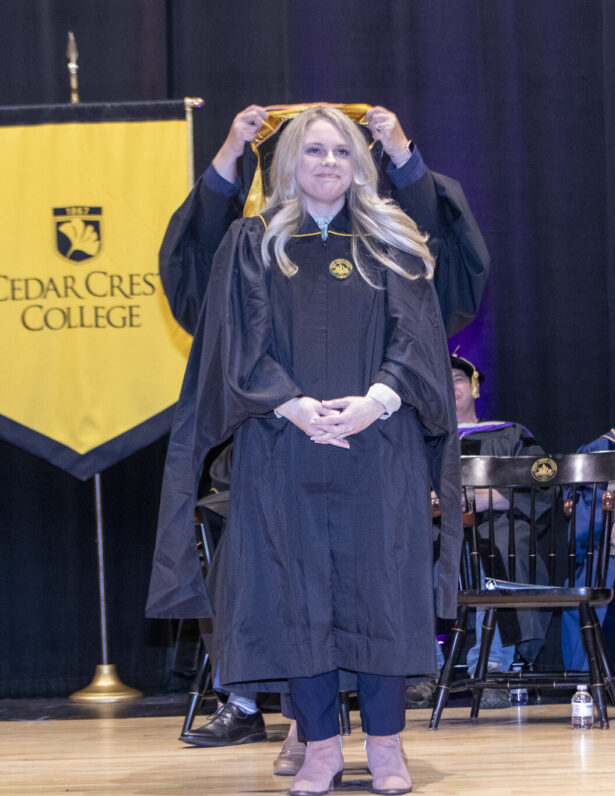
Graduate Hooding

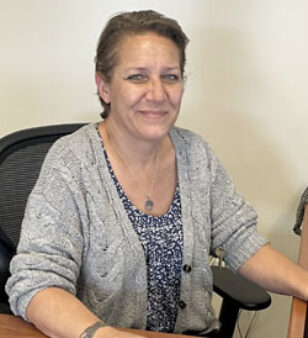
Faculty & Staff

Who’s teaching you is as important as the curriculum you choose.
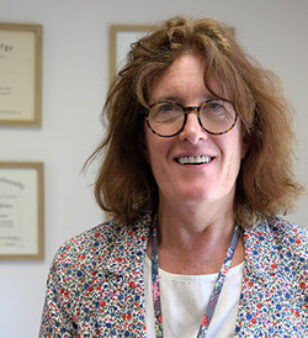
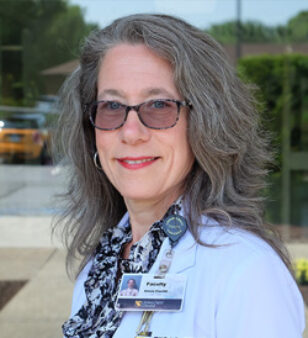
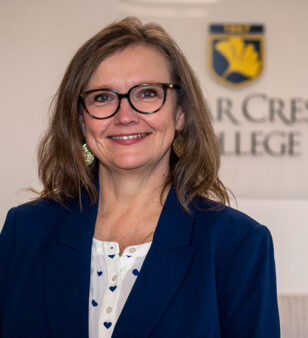
Let’s put a face to some of the names you’ll be seeing on the course listings!

Contact:
Art Gallery on Campus