Skip To Content
Loading…

Lead the Future of Occupational Therapy

Prepare for a meaningful career helping individuals and communities thrive through occupation. Cedar Crest College’s Entry-Level Occupational Therapy Doctorate (OTD) combines rigorous academics, hands-on clinical experience, and personalized mentorship. 

In just 33 months, you’ll build the skills, confidence, and leadership ability to make a lasting impact in healthcare. 

The OTD program at Cedar Crest College is built on a long history of excellence in healthcare training. We place a strong emphasis on ensuring our students experience different specialties to serve the occupational needs of populations wherever their careers take them.

We see you using the healing power of occupational therapy to help others thrive in both traditional and non-traditional practice settings.
Program Snapshot

  • 33 Months — Complete your doctorate in under 3 years  
  • 7:1 Student-to-Faculty Ratio — Personalized mentorship and support 
  • 108 Credits — Comprehensive clinical and professional preparation  
  • GRE Not Required — Apply with confidence  

The Cedar Crest OTD Advantage

Cedar Crest prepares graduates to practice occupational therapy and to lead the profession. Through scholarship, advocacy, interprofessional collaboration, teaching opportunities, community engagement, and doctoral capstone experiences, students develop the skills needed to become future leaders in healthcare and their communities. 

Developing Leaders in Occupational Therapy

OTD graduates often see:
  • Higher earning potential (approx. 20% more annually*)
  • Expanded leadership and advancement opportunities
  • Access to emerging and specialized practice settings
  • Strong long-term career mobility

*Research.com, 2026

Why Students Choose Cedar Crest:

NBCOT Preparation Built Into the Curriculum

National Board for Certification in Occupational Therapy preparation is woven throughout the program to help you succeed on exam day and in practice, providing a structured approach to help students develop confidence, clinical reasoning, and test-taking strategies as they prepare for certification and professional practice. 

  • Three NBCOT readiness assessments 
  • Personalized performance feedback  
  • Faculty mentoring and coaching 
  • Individualized study planning
Community and Healthcare Partnerships/Career Connections

Cedar Crest partners with leading healthcare organizations, including Good Shepherd, Lehigh Valley Health Network, Easterseals, St. Luke’s, and other regional providers that support student learning, networking, and career opportunities.

Hands-on Learning From Day One

From your first year to your last in our 33-month 108-credit program, you’ll start building confidence in a clinical setting. Apply classroom to real-life with our weekly immersive community clinics and programs.

  • Weekly Hand Therapy Clinic: Work alongside a certified hand therapist to observe and deliver upper-extremity rehabilitation services for underserved patients. 
  • Club Curious: Partner with Easterseals to design and lead engaging, play-based activities for children. 
  • Pediatric Aquatic Program/Low Vision Program: Collaborate with Good Shepherd Rehabilitation to support pediatric aquatic and low vision interventions through one-on-one, occupation-based care in a fun and engaging environment at the Rodale Aquatics Center on campus. 
  • Community Wellness Initiatives: Promote safety, independence, and healthy aging through community programs, including fall prevention. 
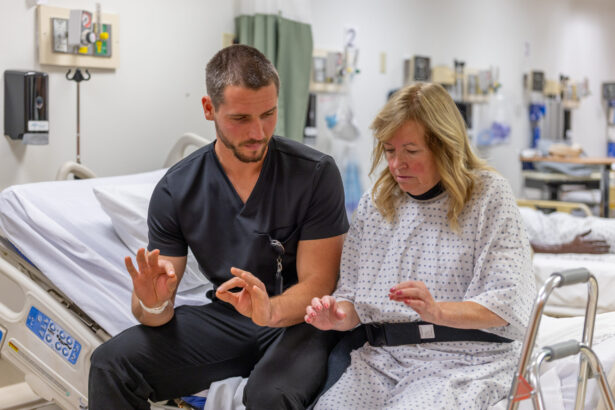
  • Interprofessional Simulations: Collaborate with other health professions in realistic, case-based simulations focused on functional outcomes, participation, and client-centered care. 
A Capstone Built Around Your Passion 

Design a 14-week doctoral capstone aligned with your interests and career goals, developing expertise through advanced clinical practice, program development, leadership, education, research, advocacy, or policy initiatives.

  • Work closely alongside faculty mentors and community partners 
  • Design and implement projects that create meaningful impact 
  • Advance your own professional goals  
Doctoral Fellowship Opportunities

Qualified students may apply for doctoral fellowships and teaching assistant positions. These competitive opportunities provide valuable leadership experience while supporting professional development.

Service, Advocacy, and Community Impact

Make an impact beyond the classroom through:

  • Student-led pediatric and developmental disability programs 
  • Interprofessional learning experiences 
  • Community service initiatives 
  • International service-learning opportunities
Study in the Heart of the Lehigh Valley 

Cedar Crest’s beautiful 91-acre arboretum campus is located near major healthcare systems and community organizations, providing exceptional fieldwork opportunities just one hour from Philadelphia and 90 minutes from New York City.

A Mission-Driven Program 

Diverse perspectives strengthen learning and care. Through a holistic admissions process, we cultivate inclusive cohorts that reflect the communities we serve—33% of students are from underrepresented populations and 42% are first-generation college students.

State-of-the-Art Facilities:

As an OTD student, you’ll have access to state-of-the-art facilities and technology that will prepare you for whichever specialty you pursue as an occupational therapist.

  • An Anatomage Table
  • 3D printer
  • Life Skills Lab for simulation experiences (with a functional kitchen, bathroom, and living space)
  • Clinical spaces for orthotic labs
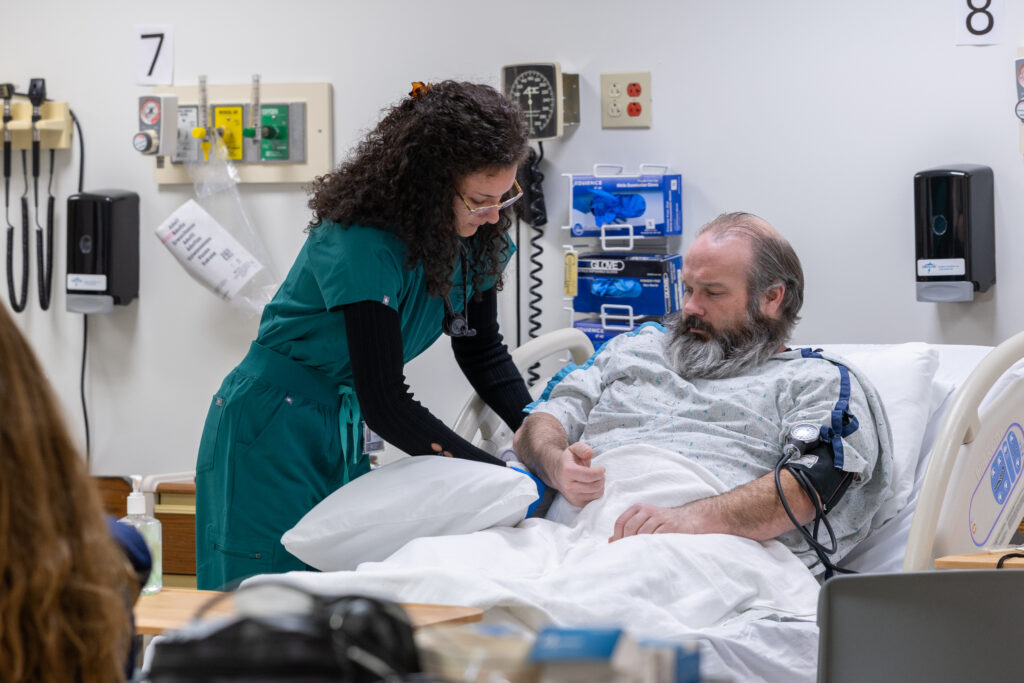
  • Acute care lab
  • Pediatric Lab equipped with a climbing wall, therapy swings, and an interactive magnetic mural

Experiential Learning, Community Engagement, and Interprofessional Collaboration

Learning at Cedar Crest extends far beyond the classroom. From the beginning of the program, students participate in simulation-based learning, interprofessional education experiences, and community-engaged programming designed to foster clinical reasoning, professional confidence, collaboration, and leadership.

Hands-on Learning with Our Community Partners:

Students apply classroom knowledge through experiences such as the Hand Therapy Clinic, Club Curious, the Pediatric Aquatic Low Vision Program, and Camp Lily. These opportunities allow students to work directly with clients, families, and community partners while gaining exposure to traditional and emerging areas of practice.


Graduation Years Students Entering/Graduating Graduation Rate
2024 36/35 97%
2025 22/22 100%
Total 58/57 98%

* Only two years of data to report.

The entry-level occupational therapy doctoral degree program is accredited by the Accreditation Council for Occupational Therapy Education (ACOTE) of the American Occupational Therapy Association (AOTA), located at 7501 Wisconsin Avenue, Suite 510E Bethesda, MD 20814. ACOTE’s telephone number c/o AOTA is (301) 652-AOTA, and its web address is www.acoteonline.org.

How To Apply

Apply via OTCAS

Dive A Little Deeper

Required Curriculum (108 credits)

OTD500         Foundations of Occupational Therapy (3 credits)
OTD 506        Research I: Scholarship & Evidence-Based Practice (2 credits)
OTD 512         Anatomy, Movement, & Occupational Performance (4 credits)
OTD 518        Occupational Behavior & Clinical Reasoning (2 credits)
OTD 524        Leadership Development & Social Change (2 credits)
OTD 530        Group Dynamics & Contexts (2 credits)
Research II: Scholarly Project (2 credits)
OTD 550        Qualitative Research & Occupational Performance (2 credits) or
OTD 556        Quantitative Research & Occupational Performance (2 credits)
OTD 562        Children & Adolescents Development, Occupations, & Performance (4 credits)
OTD 568        Children & Adolescents Evaluation & Skills Lab (4 credits)
OTD 574        Level I Fieldwork: Children & Adolescents (1 credit)
OTD 580        Functional Neuroscience & Occupational Performance (3 credits)
OTD 586         Doctoral Experience Milestone: Introduction & Exploration (1 credit)
OTD 600       Adult Development, Occupations, & Performance (4 credits)
OTD 606       Adult Evaluation & Skills Lab (4 credits)
OTD 612        Level I Fieldwork: Adults (1 credit)
OTD 618        Psychosocial Approach to Occupations (3 credits)
OTD 624        Level I Fieldwork: Psychosocial (1 credit)
OTD 630        Special Topics in Occupational Therapy (2 credits)
OTD 636        Doctoral Experience Milestone: Proposal (1 credit)
OTD 650        Older Adult Development, Occupations, & Performance (4 credits)
OTD 656        Older Adult Evaluation & Skills Lab (4 credits)
OTD 662        Level I Fieldwork: Older Adult (1 credit)
OTD 668        Practitioner as Education (3 credits)
OTD 674        Research III: Systematic Review (3 credits)
OTD 680       Doctoral Experience Milestone: Partnership (1 credit)
OTD 700        Fieldwork Level IIA (8 credits)
OTD 706        Management in Healthcare I (online) (1 credit)
OTD 701        Fieldwork Level IIB (8 credits)
OTD 707        Management in Healthcare II (online) (1 credit)
OTD 800       Integration of Learning in Occupational Therapy (3 credits)
OTD 806       Advanced Leadership & Advocacy in Occupational Therapy (3 credits)
OTD 812        Capstone Preparation I (3 credits)
OTD 850        Health and Well-being (3 credits)
OTD 856        Occupational Justice (3 credits)
OTD 862        Capstone Preparation II (3 credits)
OTD 900       Doctoral Capstone Experience (9 credits)
OTD 906        Doctoral Capstone Dissemination (1 credit)

2024/2025 Academic Year

Tentative OTD Program 2024 Fall SemesterTentative OTD Program 2025 Spring SemesterTentative OTD Program 2025 Summer SemesterTentative OTD Program 2024-2025 Academic Year
Credits151516
Tuition per Credit936936936
Total Tuition14040140401497643056
Activity and Technology Fee1451450290
Lab Fee1500001500
Total Institutional Expenses15685141851497644846
Loan Fees727272216
Books & Supplies1000100010003000
Total Related Expenses1072107210723216
Grand Total16757152571604848062

2025/2026 Academic Year (3% Tuition Increase)

Tentative OTD Program 2025 Fall SemesterTentative OTD Program 2026 Spring SemesterTentative OTD Program 2026 Summer SemesterTentative OTD Program 2025-2026 Academic Year
Credits16189
Tuition per Credit964964964
Total Tuition1542517352867641453
Activity and Technology Fee1451450290
Lab Fee1500001500
Total Institutional Expenses1707017497867643243
Loan Fees727272216
Books & Supplies1000100010003000
Total Related Expenses1072107210723216
Grand Total1814218569974846459

2026/2027 Academic Year (3% Tuition Increase)

Tentative OTD Program 2026 Fall SemesterTentative OTD Program 2027 Spring SemesterTentative OTD Program 2026-2027 Academic Year
Credits910
Tuition per Credit993993
Total Tuition8936993018866
Activity and Technology Fee145145290
Lab Fee150001500
Total Institutional Expenses105811007520656
Loan Fees7272144
Books & Supplies100010002000
Total Related Expenses107210722144
Grand Total116531114722800

Total Tentative Cost of Program (3 Year Program 2024-2027)

Total Tentative Cost of Program
Total Tuition103376
Activity and Technology Fee870
Lab Fee4500
Total Institutional Expenses108746
Loan Fees576
Books & Supplies8000
Total Related Expenses8576
Grand Total117321

Illustration based on a 3% increase annually; however, fees are subject to change.

Additional Academic Resources

Hear from your peers

Valerie Highley ’24

“Cedar Crest College’s OTD program was the only school I had interviewed with where I felt the faculty genuinely cared about me as an individual aside from a grade point average. Being part of the inaugural cohort, the values that this program is founded on sets the tone for its successful future; it is simply like no other. The college itself makes me feel at home, and I couldn’t envision myself pursuing higher education anywhere else.”

Daniela Enamorado ’24

“The moment I finished my interview for the Occupational Therapy Doctorate program, I knew I wanted to pursue my graduate education at Cedar Crest. The faculty and staff made an impact on me right away. They care about each one of their students beyond the classroom, which has been meaningful to me as I moved over 1,000 miles away from home. I am also grateful for the community I have built with my peers, as we support each other through the good and bad days of graduate school. I am happy to be a part of the Cedar Crest OTD’s inaugural class!”

Kawtar Latrech ’25

“Cedar Crest was a hidden gem for me. I grew up in a big city, so somewhere smaller and calmer was just where I needed to be for graduate school. The faculty and students here are what really drew me in. I had the opportunity to interview for the OTD program and instantly fell in love with how the program was run, the student-teacher ratio, and the campus beauty. Cedar Crest is a home for women like me to excel and grow in an environment that allows me to express myself. The community here is very open, and I feel like I am able to ask anyone anything and they will be willing to help.”

Jessica Badman ’24

“I chose Cedar Crest College for my graduate program because, not only was it close to home, but it felt like another home. The community here makes it feel welcoming and a place that I can be me. What I like most about Cedar Crest is how small the class sizes are and how you can have more of a personal experience with the professors. For the Occupational Therapy program, I enjoy learning about a profession that is growing in the health care industry and how we can change the lives of others with simple tasks. The professors are down to earth, will support you in any way, and will help you strive to be the best you can be. The program has helped shape who I am and what I can do by bringing out the best of me.”

Jah Page ’24

“I chose Cedar Crest College because of its proximity to home. My favorite things about Cedar Crest are the campus, the people, and the atmosphere. It does not feel like a competitive, envious, and strict learning environment but is open and welcoming. I love the professors in my program because of how invested they are in each of us. They have our best interests in mind and do not treat us like a number or as if our values and opinions do not matter. The OTD program has already helped me achieve professional goals as we start our second year. I am more confident, able to deal with conflicting values or opinions, and able to utilize different reasoning skills to problem solve. “

Accreditation

The entry-level occupational therapy doctoral degree program is accredited by the Accreditation Council for Occupational Therapy Education (ACOTE) of the American Occupational Therapy Association (AOTA), located at 7501 Wisconsin Avenue, Suite 510E, Bethesda, MD 20814. ACOTE’s telephone number c/o AOTA is 301.652.6611, and its web address is www.acoteonline.org.

Graduates of the program will be eligible to sit for the national certification examination for the occupational therapist administered by the National Board for Certification in Occupational Therapy (NBCOT). After successful completion of this exam, the individual will be an Occupational Therapist, Registered (OTR). In addition, all states require licensure to practice; however, state licenses are usually based on the results of the NBCOT Certification Examination. Note that a felony conviction may affect a graduate’s ability to sit for the NBCOT certification examination or attain state licensure.

Students must complete 24 weeks of Level II fieldwork as well as an individual 14-week capstone experience within 51 months of matriculation. The doctoral capstone experience must be started after completion of all coursework and Level II fieldwork as well as completion of preparatory activities defined in 2023 ACOTE OTD Standard D.1.3.

NBCOT Program Data Results

https://www.nbcot.org/Educators-Folder/SchoolPerformance

Faculty & Staff

Who’s teaching you is as important as the curriculum you choose.
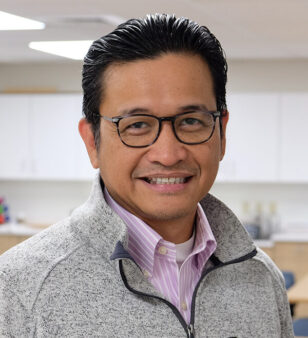
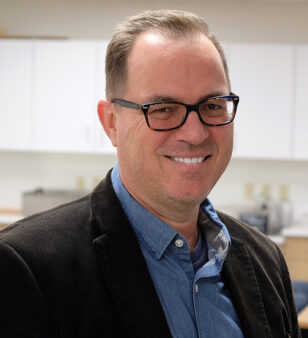
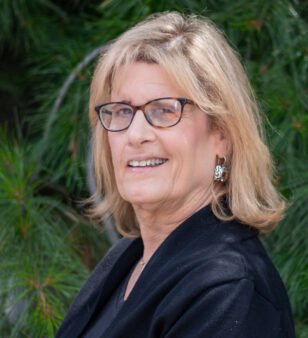
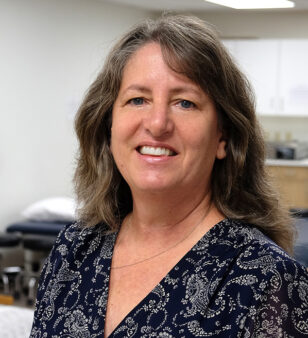
Let’s put a face to some of the names you’ll be seeing on the course listings!

Contact:
Nurse Educator